Frequently asked questions (FAQs) about technology and digital transformation for transport and logistics
We answer the most common questions about transport management systems (TMS), route optimisation, fleet management, warehouse automation, picking, last mile, reverse logistics, traceability and predictive analytics for logistics operators, carriers and distributors in Tarragona, Catalonia and across Spain.
What technology services does Macaque Consulting offer for the transport and logistics sector?
We develop custom software solutions, integrate fleet management (TMS) and warehouse management systems (WMS), and apply artificial intelligence to optimise routes, provide real-time traceability and reduce supply chain operating costs. We work on warehouse automation, route optimisation and fleet management, ERP, TMS and WMS integration, traceability with customer portals, predictive demand analytics, and last-mile and reverse logistics software. We serve clients across Spain.
What is a TMS and how does it reduce transport costs?
A TMS (Transport Management System) is the software that plans, executes and controls transport operations: load allocation, route planning, fleet and carrier management, shipment tracking and cost control. Using optimisation algorithms and artificial intelligence, it calculates the most efficient routes based on distances, time windows, vehicle capacity and traffic. It cuts the kilometres travelled, fuel consumption and empty runs.
How are picking and logistics warehouse operations optimised?
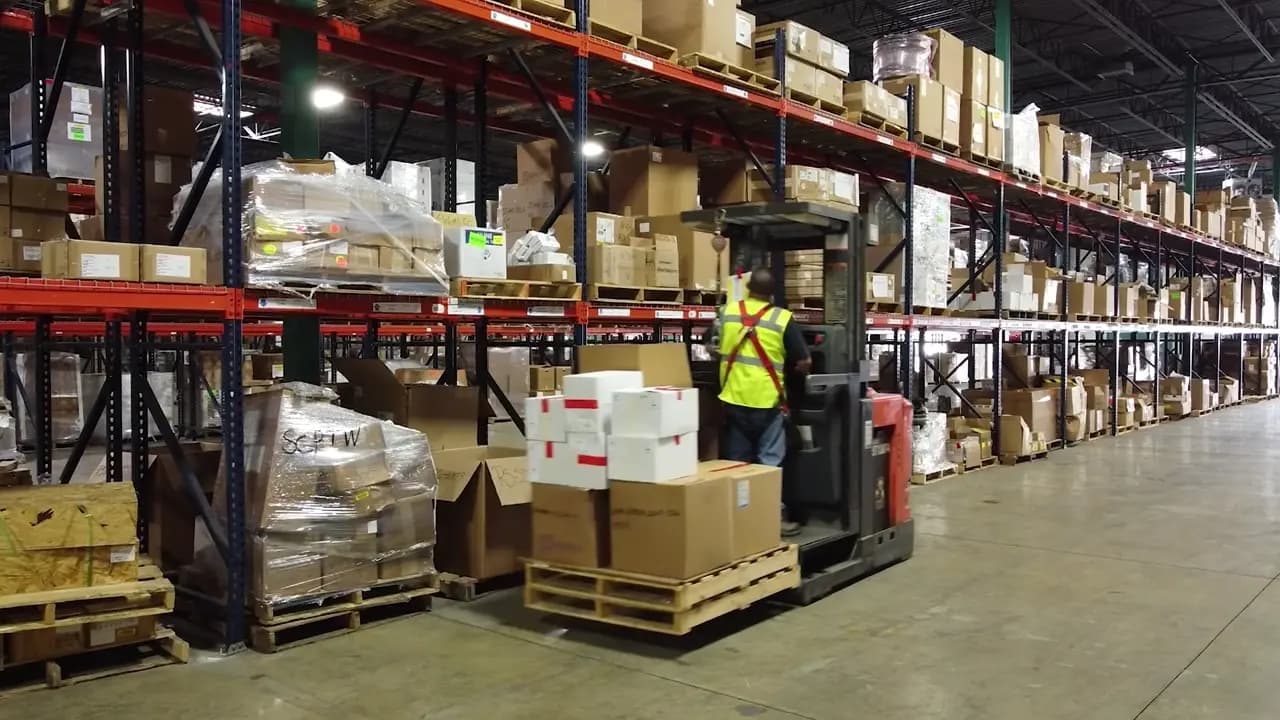
Picking, or order preparation, usually accounts for most of a warehouse's operating costs. We optimise it with a WMS that calculates efficient picking paths, groups orders into waves, assigns locations according to each product's turnover and guides operators with radio-frequency terminals or voice systems. For logistics operators with several clients, we configure multi-client management with separate rules and invoicing for each one.
How does technology improve last-mile delivery and reverse logistics?
The last mile is the most expensive and most visible stage of delivery. We develop software that optimises delivery routes in real time, assigns deliveries to drivers, offers customers time slots and live tracking, and records digital proof of delivery with signature and photograph. In reverse logistics, we automate returns management, from the customer's request through to collection, inspection and restocking, to reduce costs and improve the experience.
What are the benefits of offering real-time traceability and a customer portal?
End-to-end traceability records every shipment event, from collection to delivery, with geolocation and real-time status updates. With a customer portal, your clients check their shipments, download documents and delivery notes, and receive alerts about any incident without having to call. Customer service enquiries drop dramatically and transparency becomes a competitive advantage for retaining and winning accounts.
How does predictive analytics help plan logistics capacity?
Predictive analytics analyses order history, seasonality, sales campaigns and other external factors to anticipate workloads in warehouses and transport. With that forecast, you plan the staff, vehicles and space you need in advance, negotiate better with carriers and avoid both overload at peaks and idle resources in troughs. Integrated with the ERP, TMS and WMS, it turns operational data into profitable decisions.